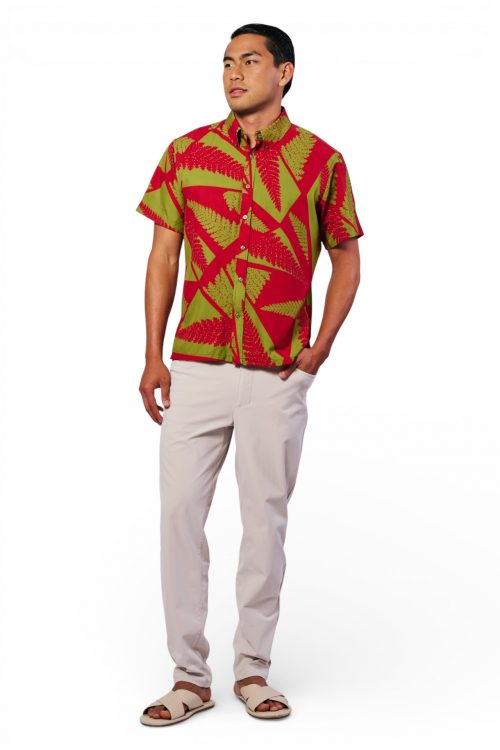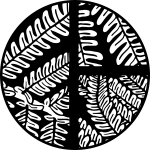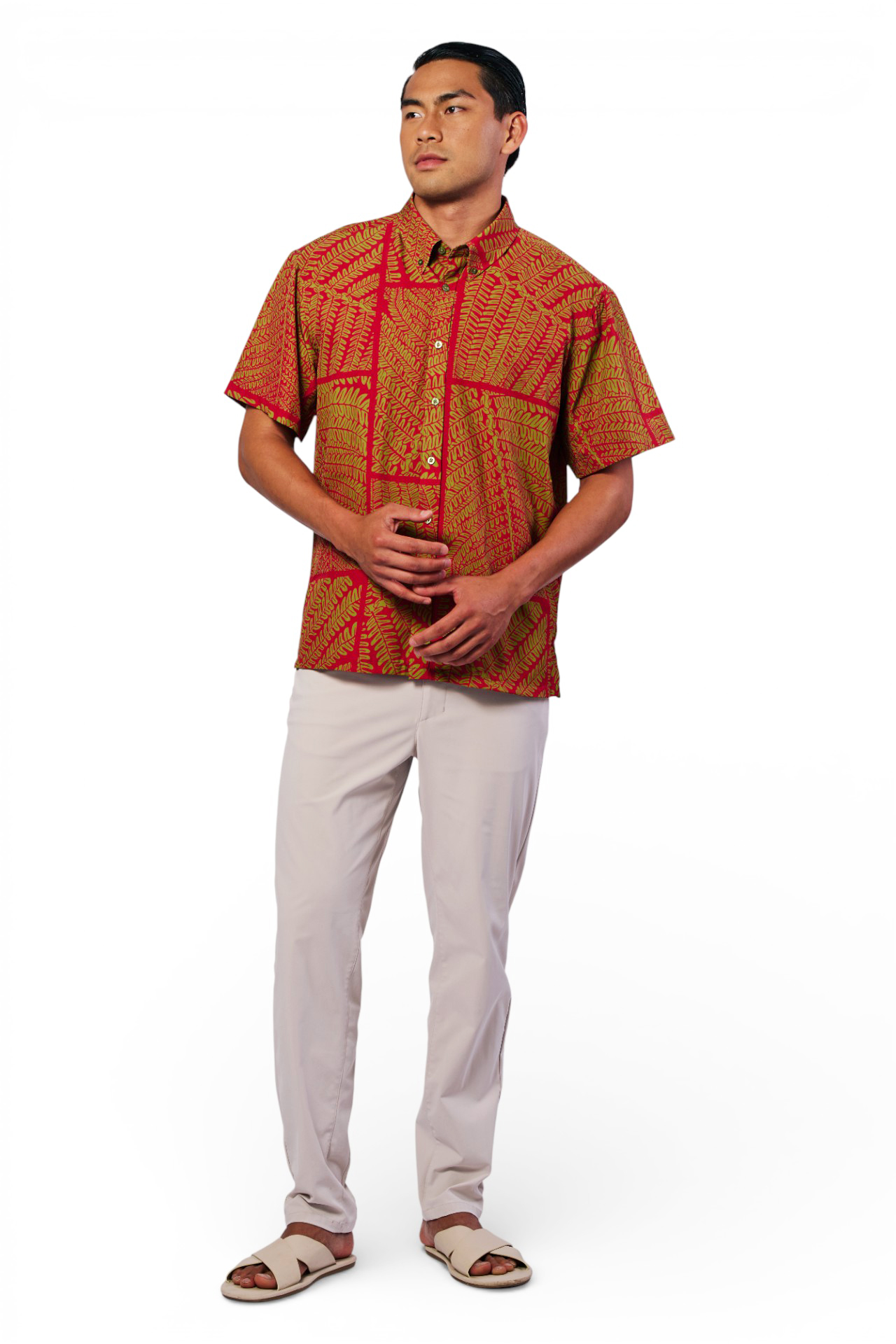
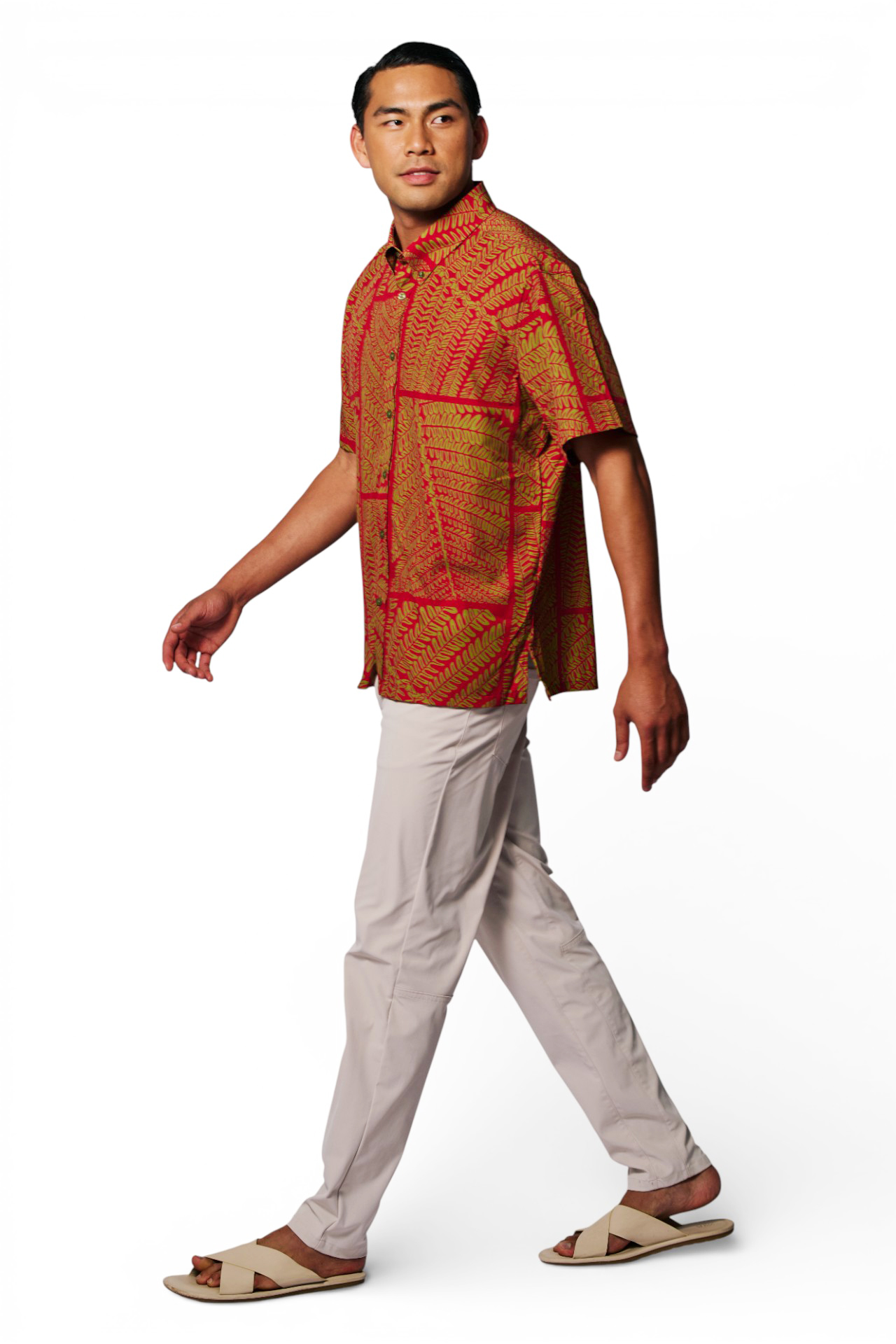
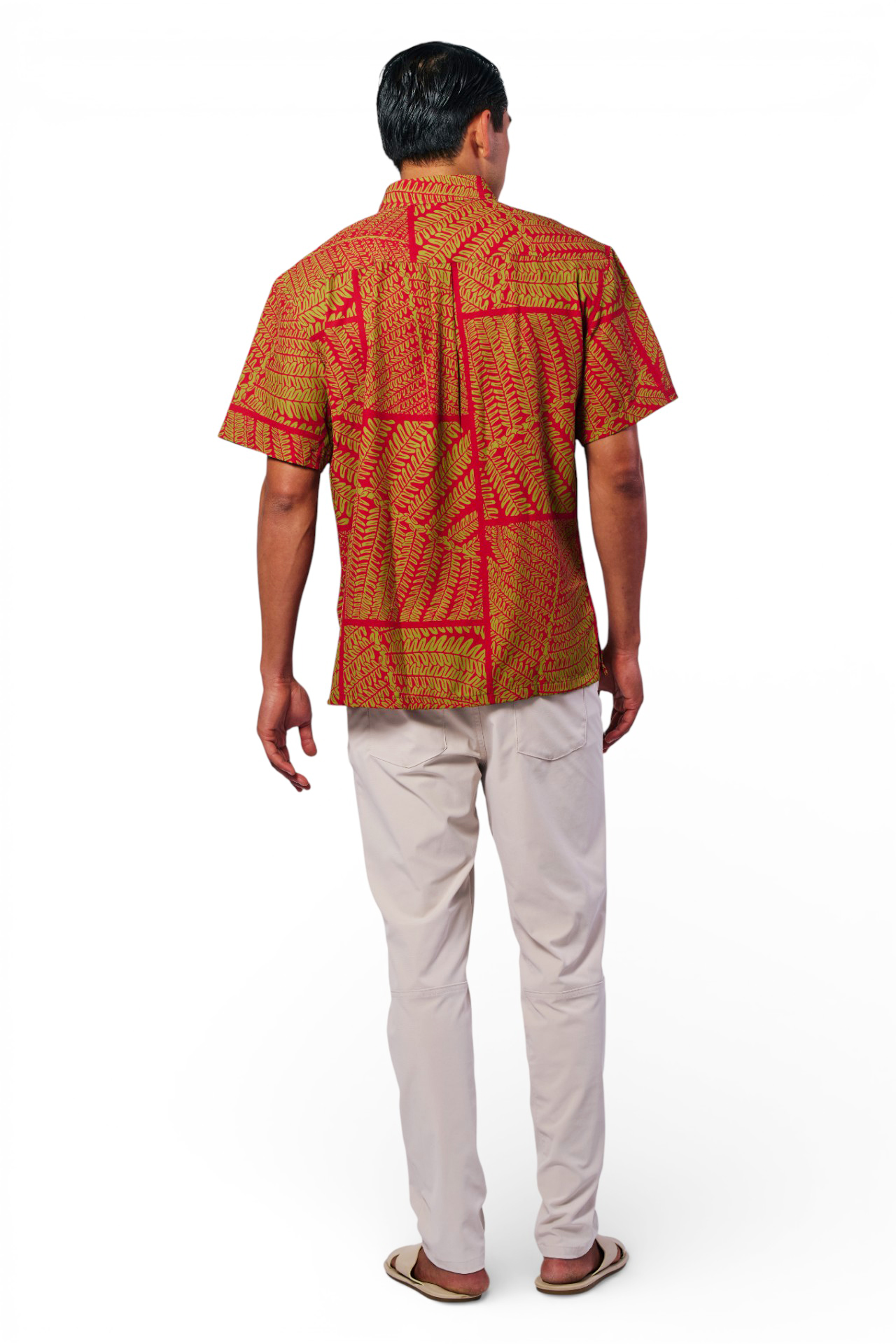
Endemic to Hawaiʻi, hāpuʻu thrives in the misty uplands where they are known for their towering presence and feathery fronds enveloped in soft, hairlike fibers known as pulu. There are two varieties found in Hawaiʻi, the hāpuʻu ʻiʻi with black pulu, and hāpuʻu pulu distinguished by its reddish golden pulu. Throughout Hawaiian history, pulu was used for dressing wounds, embalming, basket making, among other utilitarian purposes. In times of famine, hāpuʻu was eaten. By the 19th century, pulu, which means padding or mulch, was collected, dried, and exported commercially as a popular victorian commodity for stuffing pillows and mattresses.
Hāpuʻu is a kinolau of the divine feminine, great ancestress of fertility and childbirth, goddess Haumea. Just as Haumea gives rise to new life, a hāpuʻu will often sacrifice itself to allow new seeds to successfully germinate and multiply.
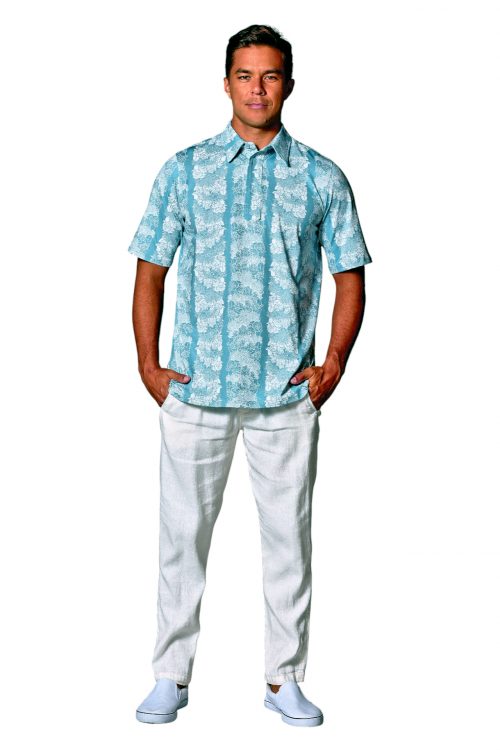
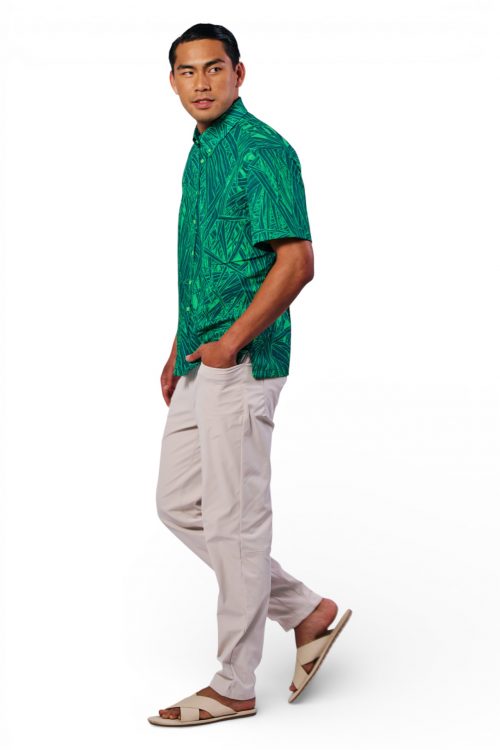
For Manaola, hāpuʻu is a memory— ferns swaying at the homes of friends and ʻohana, their shadows stretching across the lanai. This pattern captures the sense of childlike amusement, captivated in the comforting world found under the hāpuʻu’s canopy.
The hāpuʻu teaches us through the quiet generosity of nature, that strength lies in the ability to foster growth, not just for oneself, but for all that surrounds us. Through this pattern, we honor its presence in our memories, its role in our landscapes, and its spirit of abundance that continues to provide from generation to generation.
Reviews
There are no reviews yet.