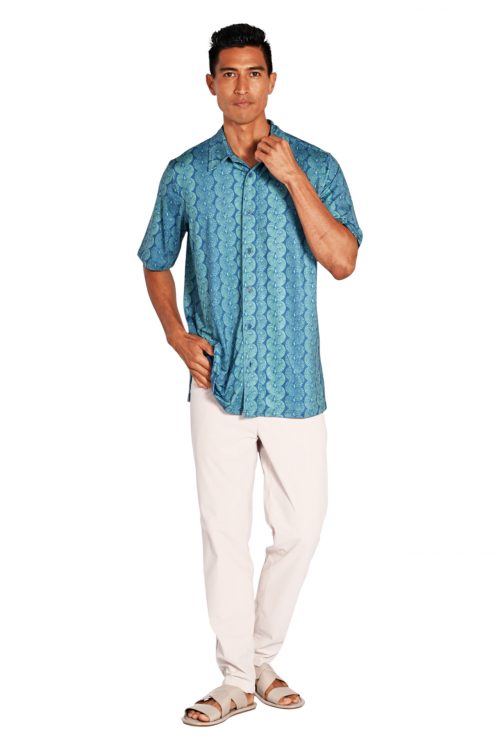
In the quiet hours of the morning, Manaola and his family would journey to the misty uplands, gathering palapalai ferns still glistening with dew. These cherished memories serve as the base of inspiration for Manaola’s hand-drawn lei palapalai illustrations.
Palapalai ferns are prized among Hula dancers as an embodiment of Laka, the goddess of Hula. Their soft segmented leaves can be found in shady areas at the base of native forests. In cultural practice, the fronds of the palapalai were fashioned into lei hili (pleated garlands) and placed on the altar of the goddess Laka and worn by the hula dancer to invoke the spirit of the dance to enter and bring forth inspiration. Adorning the dancer’s head, lei palapalai serves as a connection between the dancer and the forest, attuning the wearer to the spirit of the land.
It is believed that the use of these adornments assimilate the likeness of the leaf bodies in the forest. As the palapalai move gracefully in the slightest of winds, so does the dancer move with the elemental movements of nature. Traditional songs and dances refer to their dainty character and fine palp that gathers moisture from the mist and rain.
Thus the Lei Palapalai pattern embodies the lush verdure of the forest realm and the vivacious spirit of the water cycles that sustain abundant growth. It is the thriving qualities of the wildwood that are honored by this native leaf body and continue to inspire natural movement as we dance through everyday life. It is Manaola’s wish that this artistic piece captures the beauty of the forest realm, bringing nature’s inspiration to the modern world.
Reviews
There are no reviews yet.