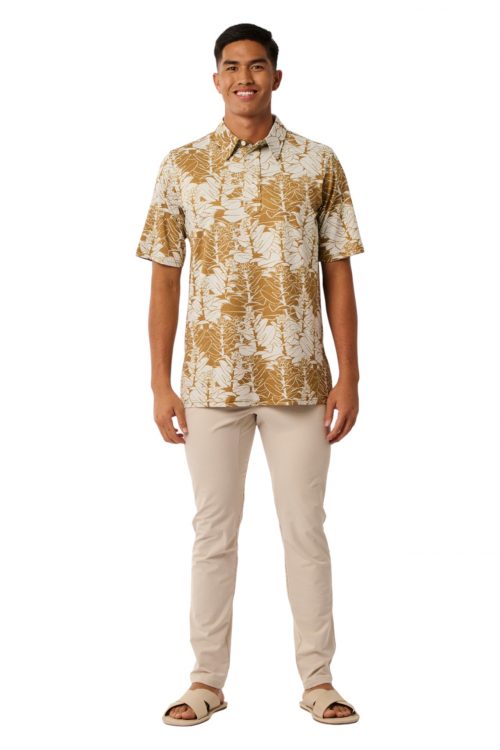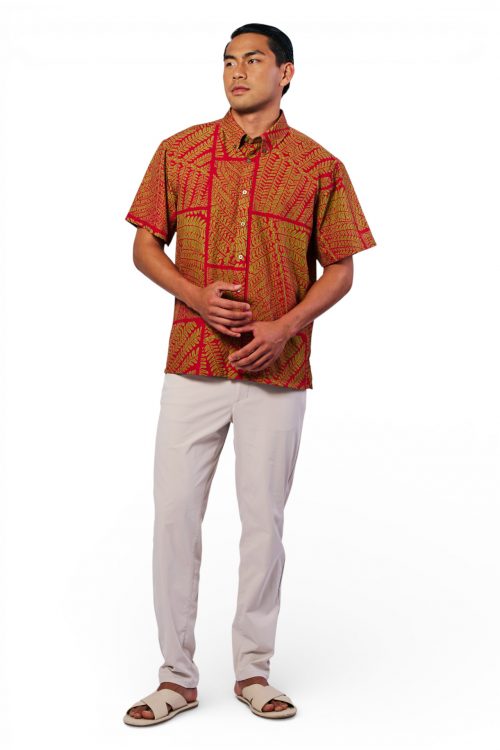
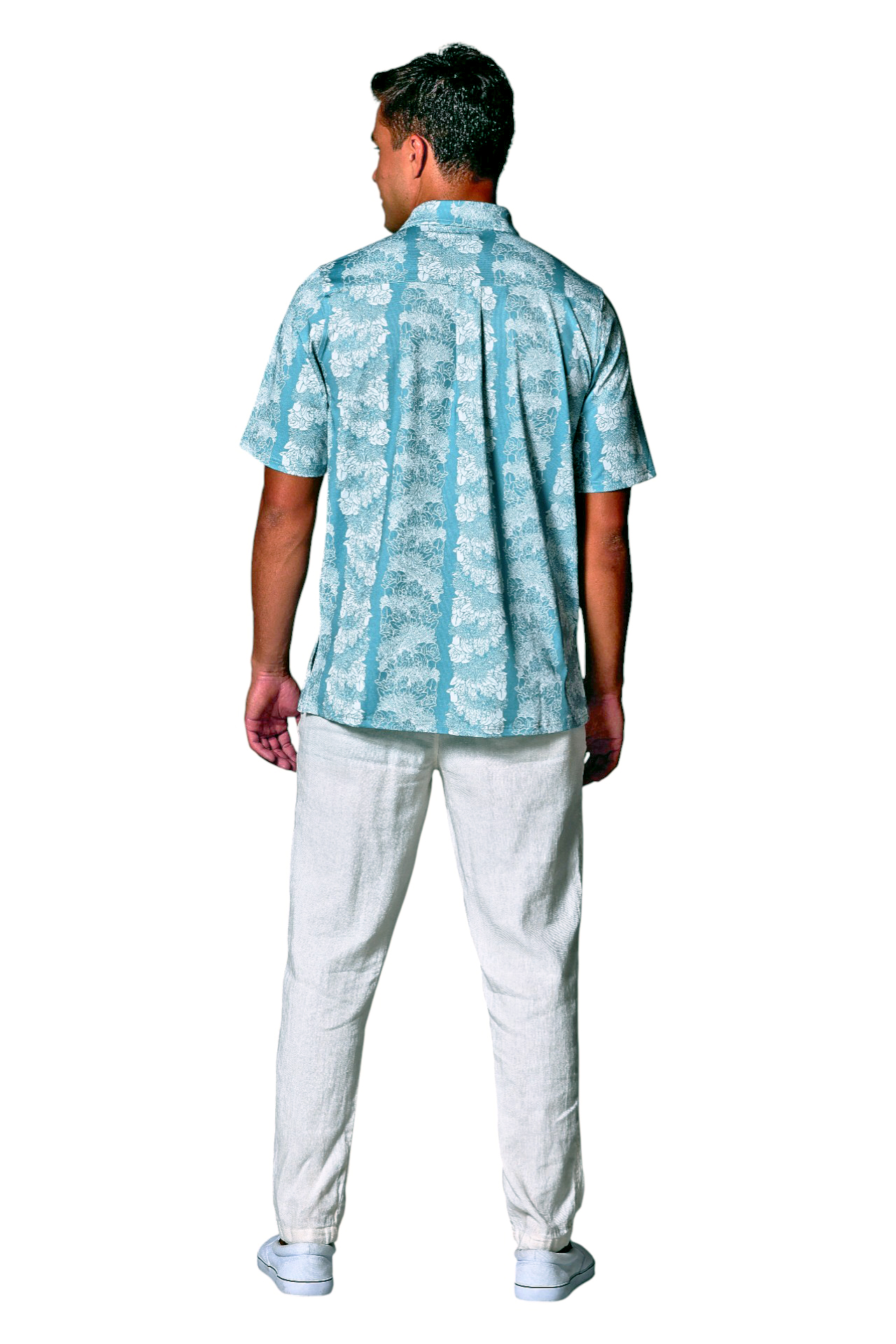
The request to enter the forest is offered in vibrational sound in hopes that the wildwood will grant entry into its verdant abode. With humble desire, the dancer steps into the living embrace of the forest, ready to ʻohi– to gather or harvest with purposeful intention. The ʻōhiʻa gathers too, drinking in the mist from the shifting veils of the forest as dew forms gently upon its delicate blossoms.
Breathing in the forest, the dancer moves in synchrony with the rhythm of nature, this sacred exchange a communion with the elements. In hula tradition, ʻōhiʻa is entwined with ceremony. Its divine guardians, Kūkaʻōhiʻalaka and Hinaʻūluʻōhiʻa, safeguards its growth. In his masculinity Kūkaʻōhiʻalaka strengthens, in her femininity Hinaʻūluʻōhiʻa nurtures. As hula practitioners offer two blossoms in reverence, Lei ʻŌhiʻa honors duality and the careful balance of forces that shape inspiration and transformation.
Lei ʻŌhiʻa takes shape in the style of lei pāpahi, a patterned lei that reflects the deliberate placement and order of things in the universe. Ritual and ceremony set intention, aligning us with the natural cycles of creation, just as each blossom, bud, and leaf is purposefully placed in the construction of this lei.
Through Lei ʻŌhiʻa, Manaola celebrates emergence, the perpetual unfolding of life and inspiration. Woven in the wili style, each turn of the lei binds intention to action. ʻŌhiʻa means “to occur,” a recognition that through ritual, we set into motion the manifestations of our dreams.
Reviews
There are no reviews yet.